Acrylic ink is one of those art mediums that feels both playful and professional. It sits somewhere between the fluid brilliance of watercolor and the permanence of acrylic paint, offering artists an almost endless range of possibilities. Because it’s highly pigmented, water-resistant once dry, and comes in a dazzling range of colors, acrylic ink can be used in everything from fine art and illustration to craft projects and mixed media.
Whether you’re new to acrylic ink or looking to expand your repertoire, here are ten techniques you can experiment with. Each one unlocks different textures, effects, and moods.
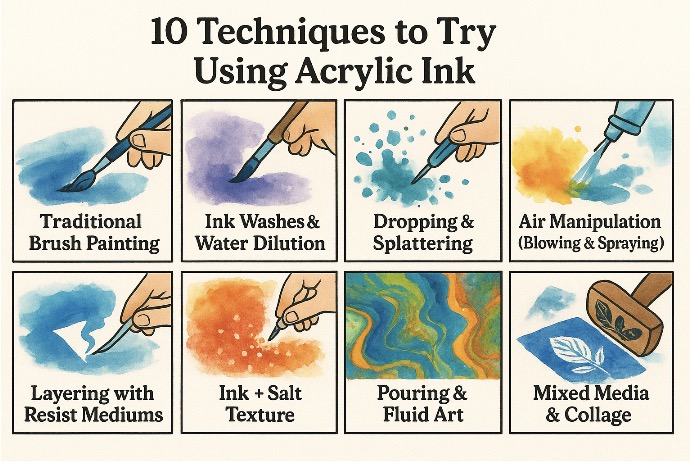
1. Traditional Brush Painting
The most straightforward way to begin with acrylic ink is to treat it like liquid paint. Dip a soft brush into the ink and apply it to paper, canvas, or panel.
Why it works: Acrylic ink flows effortlessly, giving you smooth, even coverage without the brushstrokes that heavier paints sometimes leave behind.
Tips:
Use a watercolor brush or mop brush to cover larger areas.
Apply multiple layers, allowing each to dry, for luminous depth.
Try layering transparent inks for a stained-glass-like effect.
This technique is perfect for line work, loose washes, and controlled painting. If you’re used to watercolor, the experience will feel familiar—but with the added benefit of permanency once it’s dry.
2. Ink Washes & Water Dilution
One of the joys of acrylic ink is how it behaves when tMethod: Dilute ink in a mixing tray, then apply in broad sweeps to your surface. While the ink is still wet, add more water to soften edges or tilt the paper to let the liquid flow.
Effect: Light, atmospheric washes that are great for backgrounds, skies, or abstract fields of color.
Bonus: Once dry, these layers won’t reactivate (unlike watercolor), meaning you can build complex multi-layered works without muddying colors.
For beginners, this is a liberating technique—mistakes are less permanent, and the process encourages play.
3. Dropping & Splattering
Sometimes the most expressive effects come from surrendering control. Dropping or splattering acrylic ink directly onto a wet or dry surface creates bursts of color, blooms, and unexpected textures.
How to do it:
Load a pipette, eyedropper, or even the ink bottle’s dropper.
Release ink onto damp paper to see it spread organically.
For splatters, flick a stiff brush or use your finger to tap the brush handle.
Where it shines: Abstract art, expressive backgrounds, galaxy effects, or adding energy to a composition.
Splattering is messy but freeing, a way to embrace chance in your creative process. Keep a scrap sheet handy to protect surfaces—and lean into the chaos.
4. Air Manipulation (Blowing & Spraying)
Because acrylic ink is so fluid, you can move it around with air for dramatic, flowing effects.
Techniques:
Straw blowing: Drop ink on the page and blow through a straw to push tendrils outward. Great for organic forms resembling coral, trees, or abstract veins.
Spray bottle: Lightly mist water over ink to diffuse edges.
Compressed air: Use canned air for more powerful bursts that spread ink quickly across a surface.
The results are unpredictable but stunning, especially for backgrounds or nature-inspired work.
5. Layering with Resist Mediums
Acrylic ink pairs beautifully with resist techniques, where a medium prevents ink from adhering to certain areas.
Options:
Masking fluid: Paint masking fluid onto paper, let dry, then apply ink washes. Peel away the resist to reveal clean, sharp shapes.
Wax resist: Rub a candle or crayon onto the surface before inking; the wax repels the liquid, leaving textured highlights.
Tape stencils: Apply masking tape in geometric patterns before inking, then peel to reveal crisp edges.
Resist methods add a graphic edge to the softness of ink washes, making them great for illustration, lettering, or design-focused art.
6. Ink + Salt Texture
One of the most magical interactions you can create with acrylic ink is using ordinary salt.
How it works: While the ink is still wet, sprinkle coarse salt onto the surface. As the ink dries, the salt crystals absorb pigment, leaving starburst textures.
Best surfaces: Watercolor paper or other absorbent materials.
Use it for: Starry skies, textured abstract pieces, or backgrounds with organic movement.
Once the piece is completely dry, brush away the salt to reveal crystalline textures that look almost like frost.
7. Pen & Ink Linework
Because acrylic ink can be loaded into dip pens or technical pens, it’s excellent for line art.
Advantages:
Strong, bold lines that don’t fade.
Waterproof once dry, making it easy to layer washes over them.
Ideas:
Illustrators often use black acrylic ink for detailed sketches, then add color washes on top.
Try metallic acrylic inks with a calligraphy nib for luminous lettering or accents.
This technique bridges fine art and graphic design, appealing to anyone who loves precise detail.
8. Pouring & Fluid Art
If you’ve ever seen acrylic pouring with heavier paints, you’ll love trying it with ink. Because acrylic ink is already fluid, it spreads effortlessly without needing as many additives.
How to do it:
Pour different ink colors directly onto a canvas.
Tilt the canvas to let them flow into one another.
Use pouring mediums if you want to control viscosity and prevent cracking.
Results: Luminous marbled patterns, cells, and rivers of color.
This technique is addictive, and no two pours ever look alike. It’s especially popular in abstract and decorative art.
9. Mixed Media & Collage
Acrylic ink is versatile enough to play well with other mediums. Integrating it into mixed media can take your artwork to the next level.
Ideas: Use ink washes as a background, then add layers of collage paper or fabric. Combine with acrylic paint for contrast between fluidity and opacity.
Add details with colored pencil, graphite, or pastel on top of dried ink.
Because acrylic ink dries permanently, it won’t smudge under other materials, making it a stable base layer.
10. Printing & Stamping
Acrylic ink can also be used in printmaking experiments.
Techniques: Apply ink to a gelatin plate for monoprinting. Press paper onto the surface to pull unique textures and patterns.
- Brush ink onto stamps or found objects (like leaves or fabric textures) and press them onto your paper.
- Try rolling it with a brayer to create layered textures.
This technique is especially fun if you enjoy repetitive patterns, abstract textures, or decorative paper-making.
Bonus Tips for Success
Surface matters: Acrylic ink works on watercolor paper, canvas, wood, fabric, and more. Experiment to see how different surfaces absorb or repel it.
Tools: Pipettes, straws, spray bottles, droppers, calligraphy pens—all of these expand what you can do.
Protect your work: Once dry, acrylic ink is permanent but can still be damaged. Consider sealing your artwork with a spray varnish.
Experiment fearlessly: Acrylic ink thrives on play. The most interesting discoveries often come from mistakes.
Why Acrylic Ink Is Worth Exploring
Acrylic ink gives you both the fluid beauty of watercolor and the staying power of acrylic paint. It dries quickly, doesn’t lift once set, and allows layering and texturing in ways few other mediums do. Whether you’re a painter, illustrator, calligrapher, or mixed media artist, these techniques offer starting points to discover your own unique voice.
The key takeaway? Don’t feel restricted to one style. Use it traditionally, splash it freely, combine it with other mediums—acrylic ink is one of the most versatile tools in the artist’s studio.
The best place to buy all your art and craft materials in the UAE is undeniably Sandhai.ae. The platform offers a wide range of high-quality supplies, from paints and brushes to canvases, craft tools, and DIY essentials—all at affordable prices. With fast delivery and trusted brands, Sandhai.ae makes creative shopping easy, reliable, and enjoyable for artists of every level.