

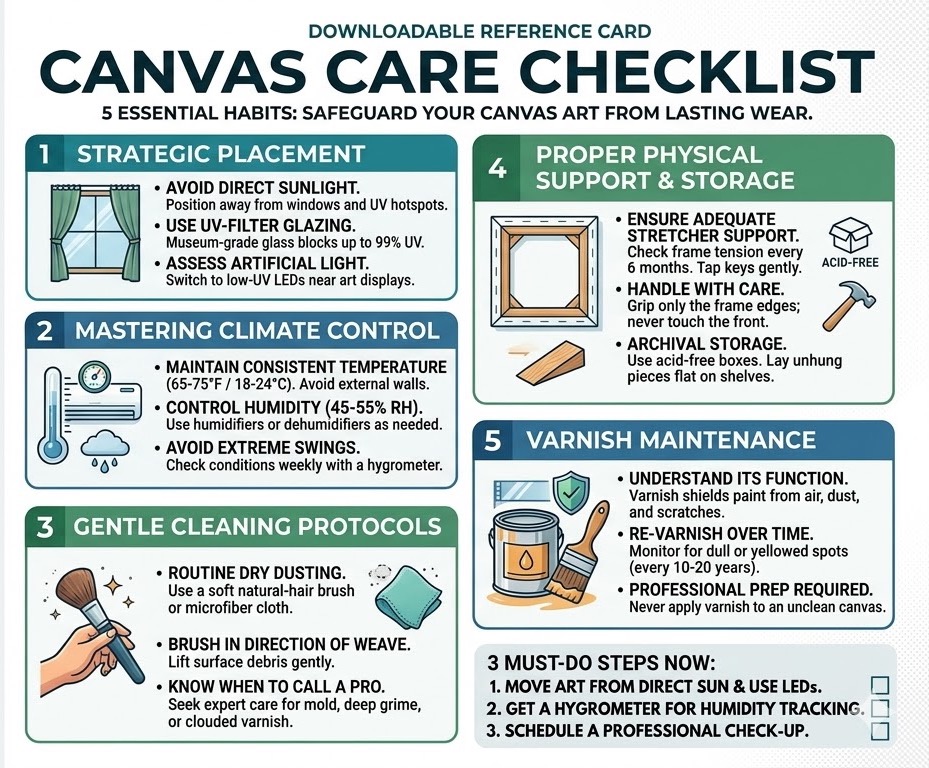
Canvas art holds a special spot in your home. It captures memories, sparks joy, and often costs a pretty penny. But without care, it fades or cracks, turning that treasure into a shadow of itself. Factors such as sunlight, moisture, and dust accelerate this damage. You can stop it with simple steps. This guide shares five key habits to keep your canvas art looking fresh for years. We’ll cover threats from UV rays to rough handling and give you easy ways to fight back.
Habit 1: Strategic Placement to Control Light Exposure
Light hits canvas art hard. UV rays from the sun or bulbs break it down over time. Place your pieces wisely to cut this risk.
Understanding the Perils of Direct Sunlight
Sunlight pours through windows and zaps colors right out of paints. UV rays snap the ties in paint binders, making hues fade fast. Varnish turns yellow, and the canvas art gets brittle. You might see reds turn pink or blues go dull in just months if it’s in direct beams. Check your room’s light patterns. Watch how sun moves from morning to night. Shift your art away from those hot spots. This small check saves big on repairs later.
Utilizing Protective Glazing and UV Filters
Framing helps block harm. Regular glass cuts some glare but lets UV sneak in. Switch to museum glass. It blocks up to 99% of UV and cuts reflections. Conservation glass works the same way for high-value pieces. Galleries use these standards. They keep lights under 50 lux for oil paints to avoid quick fade. Try it at home. Hang your canvas art behind UV-filter glass. It keeps colors true without dimming the view.
Assessing Artificial Light Sources
Not all indoor lights are safe. Old bulbs like halogens throw out UV just like the sun. They heat up, too, which speeds up yellowing. LEDs shine better. Pick ones labeled low-UV for art spots. Track lights or lamps aimed at your walls? Swap them now. This habit cuts fade risk by half. Your canvas art stays bright even under daily glow.
Habit 2: Mastering Climate Control for Canvas Stability
Air and heat shift your canvas structure. Dry spells tighten it too much. Damp ones make it sag. Keep steady conditions to hold it firm.
The Danger of Humidity Swings
Humidity jumps cause real trouble. When the air dries out, canvas duck tightens and pulls on paint. Wet spells loosen it, leading to cracks or waves. This back-and-forth warps frames too. Aim for 45% to 55% relative humidity. That’s the sweet spot for stretched fabrics. Museums stick to this range year-round. Your home can too with basic tools. One swing too many, and you face costly fixes.
Maintaining Consistent Temperature Zones
Heat sources wreak havoc quietly. Radiators dry air fast. Vents blast hot or cold gusts. Exterior walls in hot summers or cold winters add stress. Heat speeds up paint breakdown, like aging cheese in the sun. Keep temps between 65 and 75 degrees Fahrenheit. Hang art away from fireplaces or AC units. Basements trap moisture. Attics swing wild. Pick the inner walls for your best pieces. Steady spots mean longer life.
Employing Dehumidifiers and Humidifiers Judiciously
Fight climate woes with smart tools. A small dehumidifier pulls excess wet from air in humid spots. Humidifiers add moisture in dry winters. Don’t overdo it—monitor with a cheap hygrometer. Place one near your art display. Check readings weekly. These devices keep levels even without big changes. For collections, set up a dedicated shelf with controls. Your canvas art thank you with stable shape.
Habit 3: Implementing Gentle, Routine Cleaning Protocols
Dust builds up quickly on canvas. It scratches paint if you rub it wrong. Or it draws bugs that chew edges. Clean, soft, and often to stay ahead.
Dry Dusting Techniques for Surface Debris
Start with dry methods only. Grab a soft brush, like those for makeup, with natural hairs. Or use a microfiber cloth. Brush in the direction of the canvas weave. This lifts dust without pressing in. Do it every few weeks in dusty homes. Avoid feather dusters—they scatter particles back on. Skip canned air too; it blasts paint loose. Gentle strokes keep the surface clean and safe.
Recognizing When Professional Cleaning is Necessary
Some dirt needs experts. Look for mold spots, deep grime, or varnish that clouds up. These signs mean home fixes won’t cut it. A certified conservator steps in for deep cleans. They use safe solvents to lift stains without harm. Pros handle oil or acrylic layers right. If your piece shows these issues, call one soon. Delaying leads to bigger damage. Pros save art that seems lost.
Avoiding Chemical Cleaners and DIY Solutions
Household stuff spells disaster. Water soaks in and warps canvas. Soap leaves residue that traps more dirt. Oils or sprays react bad with paints. Stick to dry tools. One wrong wipe, and colors bleed or crack. Test any new method on a hidden edge first. But really, skip the experiments. Safe habits beat quick fixes every time.
Habit 4: Ensuring Proper Physical Support and Storage
Bumps and poor frames hurt canvas art fast. Tension slips, edges rub. Handle with care to keep it taut and true.
The Importance of Adequate Stretcher Support
Stretchers hold your canvas tight. Wooden ones have keys—small wedges—to adjust pull. If it sags, tap keys gently with a mallet. This restores even tension without overdoing it. Check every six months. Loose spots lead to cracks in paint. Pros say proper support prevents 80% of structural woes. Keep yours firm, and the art stays flat.
Best Practices for Safe Transport and Handling
Moving time? Grip only frame edges. Never touch the front—oils from hands stain. Wrap in bubble wrap, then acid-free paper. Box it flat to avoid bends. Home moves often smash art from rushed packing. Pros use crates and straps for zero contact. Follow suit. Pad corners well. Your piece arrives whole.
Archival Storage for Unhung Pieces
Store smart if not on walls. Use acid-free boxes or sleeves. Lay flat on shelves, not leaned. Concrete floors wick moisture—lift with spacers. Keep away from light and heat. This setup fights warp and fade. For long-term, label and note dates. Your stored art waits ready, unharmed.
Habit 5: Varnish Maintenance and Surface Protection
Varnish shields like a raincoat. It takes the hits so paint stays pure. Watch it, and your canvas art endures.
Understanding the Function of Protective Varnish
Varnish sits on top as a guard. It blocks air that oxidizes colors. Dust and scratches bounce off easier. Without it, paint dries dull from pollution. Think of it as skin on fruit—keeps freshness in. Apply the right paint after dries fully. This layer buys years of protection.
The Necessity of Re-Varnishing Over Time
Varnish wears out. Natural types yellow after 10 to 20 years. Pros remove old items and add fresh ones. Synthetic kinds last longer with less color shift. Check yours yearly for dull spots. Re-do keeps the shield strong. Skip it, and the damage hits paint directly.
Never Apply Varnish Without Prior Surface Preparation
Dirty canvas under varnish? Dirt locks in forever. Clean first with pro help. They spot issues you miss. Rush the job, and you regret it. Prep the right varnish that works.
Conclusion: The Long View of Canvas Art Care
Art Canvas thrives on steady care. These habits—smart light placement, even climate, soft cleaning, solid support, and varnish checks—stop wear at the source. Small daily acts add up to big wins. Your pieces stay vibrant, not victims of time.
Here are three must-do steps right now:
Move art out of direct sunlight and swap to LED lights.
Get a hygrometer to track humidity in display areas.
Schedule a pro check for dust or sagging signs.
Start today. Your canvas will reward you with colors that last a lifetime. Share your tips in the comments—what’s your go-to for art care?
Where can you find Art Materials:
In the UAE, sandhai.ae serves as a convenient one-stop online destination for artists looking to stock up on high-quality materials. Their extensive catalog includes a wide range of Funbo stretched canvases, available in various 3D and standard sizes (from small 20×20 cm to large 120×120 cm), also custom sized canvases with a heavy 380 gsm weight. For painters, they offer a diverse selection of acrylic and watercolor paints in both tubes and sets, alongside professional-grade brush sets from brands like Funbo and Ranger that cater to different strokes and techniques.
To ensure your masterpiece is protected from the elements, you can also find essential finishing supplies like varnish and gesso, as well as other studio accessories like easels and palettes, all available for delivery across the Emirates.