If you’ve ever wandered through an art store and found yourself staring at rows of colorful bottles and pens labeled ink, you’re not alone. India ink, acrylic ink, alcohol ink, fountain pen ink, pigment ink, dye ink—the list feels endless. For mixed media artists, choosing the right ink can be both exciting and overwhelming.
The truth is: there isn’t one “best ink” for everyone. Instead, each type of ink offers different properties, effects, and advantages depending on how you use it. In this guide, we’ll break down the most common kinds of ink, explore how they behave in mixed media, and answer the most common questions artists have. By the end, you’ll be able to confidently choose the inks that suit your style and projects.
Why Inks Belong in Mixed Media
Mixed media is all about combining materials—paint, collage, pastel, graphite, fabric, digital print, you name it. Inks bring a unique quality to the mix: they’re fluid, versatile, and intensely pigmented.
Expressiveness: Inks flow easily, allowing for bold lines, washes, or spontaneous splatters.
Layering: Many inks can be transparent, which makes them perfect for building luminous layers.
Contrast: The precision of ink can sharpen a piece that also uses looser mediums like acrylic paint or watercolor.
Compatibility: Depending on the type, inks can work with papers, fabrics, canvases, wood, or even synthetic surfaces.
But since inks come in so many forms, the question becomes: which ones work best for what?
The Main Families of Ink
Before diving into specific questions, it helps to know the primary categories of ink you’ll encounter in the art world.
1. India Ink (Chinese Ink)
Properties: Traditionally carbon-based, waterproof once dry (if shellac or acrylic is added).
Appearance: Deep, rich black or sepia, sometimes available in colors.
Best for: Drawing, calligraphy, line work, and dramatic contrast.
Mixed media use: Perfect for outlines, inking over acrylics, or adding depth to collage backgrounds.
2. Acrylic Ink
Properties: Made from super-fine acrylic pigments suspended in liquid. Permanent, lightfast, and waterproof once dry.
Appearance: Comes in a huge color range, from transparent to opaque, metallic, and iridescent.
Best for: Versatile mixed media; behaves like watercolor when diluted, but won’t reactivate once dry.
Mixed media use: Ideal for layering under or over acrylic paint, combining with collage, or using in fluid art techniques.
3. Alcohol Ink
Properties: Dye-based, highly fluid, and designed to work on non-porous surfaces. They spread unpredictably when combined with isopropyl alcohol.
Appearance: Brilliant, luminous colors with flowing, abstract effects.
Best for: Yupo paper, ceramic tiles, glass, or synthetic surfaces.
Mixed media use: Excellent for abstract work, backgrounds, or when paired with resin for glossy finishes.
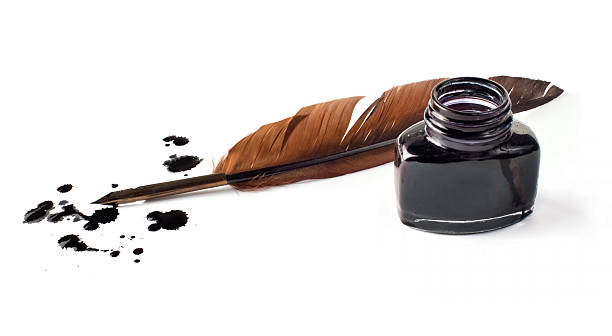
4. Fountain Pen Ink
Properties: Water-based dye inks made to flow smoothly in fountain pens. Not waterproof.
Appearance: Wide range of colors, often transparent. Some are “shimmer” inks with metallic particles.
Best for: Writing, sketching, and expressive drawing.
Mixed media use: Great for sketchbooks, line drawings, and layering with water-based media (since they can blend or bleed beautifully).
5. Pigment Ink (Archival Ink)
Properties: Pigment particles suspended in a liquid base. Permanent and fade-resistant.
Appearance: Found in ink pads, markers, and artist pens.
Best for: Stamping, detailed work, and anything that needs archival quality.
Mixed media use: Works beautifully in scrapbooking, journaling, and mixed media projects that require longevity.
6. Calligraphy & Dip Pen Inks
Properties: Often thinner and more fluid; some waterproof, some not.
Appearance: Designed to flow from dip pens or brushes with consistency.
Best for: Calligraphy, decorative writing, and fine linework.
Mixed media use: Perfect for adding text or ornate embellishments to collages or paintings.
Common Mixed Media Questions About Ink
Now that we know the main players, let’s tackle the most common questions artists ask when choosing ink.
1. Which ink is best for beginners in mixed media?
If you’re just starting, acrylic ink is the most forgiving. It’s versatile, vibrant, and waterproof when dry, meaning you can layer over it without worrying about smudges. Unlike alcohol ink, it works on both porous and non-porous surfaces, so you can experiment without needing specialized materials.
Try a few primary colors and black/white to start. You’ll be amazed at how much variety you can get from mixing and diluting them.
2. Can I mix inks with other paints?
Yes, but it depends on the ink:
Acrylic ink mixes seamlessly with acrylic paints.
India ink can layer over acrylics, but not always under them (some acrylic mediums resist adhesion).
Alcohol inks don’t mix well with water-based paints, but they can create striking contrasts when layered separately.
Fountain pen ink is best kept to drawing and sketching—it’s prone to bleeding under heavy wet layers.
Tip: Always test small patches before committing to a large piece.
3. How do inks behave on different surfaces?
Paper: Absorbent papers (like watercolor paper) soften and spread inks, while smoother papers give crisp lines.
Canvas: Works well with acrylic ink and India ink, but less so with fountain or dye inks.
Yupo/synthetic paper: A dream for alcohol inks—they glide and spread unpredictably.
Wood/Fabric: Acrylic inks can stain and hold their color well.
Knowing your surface is just as important as knowing your ink.
4. Are all inks permanent?
No!
Acrylic and pigment-based inks: Permanent and lightfast.
India ink: Permanent if shellac/acrylic-based, but some versions may re-wet.
Alcohol ink: Fade over time without UV protection; sealing is recommended.
Fountain pen ink: Generally not permanent unless specifically labeled.
If permanence matters (e.g., for archival art), always check the label for words like pigment-based, archival, or lightfast.
5. How do I seal ink in mixed media projects?
Sealing depends on the ink:
Acrylic ink: Usually doesn’t need sealing, but varnish can add gloss or protection.
Alcohol ink: Must be sealed with UV-resistant spray varnish or resin.
India ink: Usually stable, but spray varnish adds protection.
Fountain pen ink: If used in artwork, consider fixing sprays to prevent smudging.
Always spray in thin, even layers to avoid disturbing the ink.
6. What’s the difference between dye-based and pigment-based inks?
Dye-based inks are soluble color molecules dissolved in liquid. They’re vibrant but can fade over time (fountain inks, alcohol inks).
Pigment-based inks contain solid color particles. They’re more opaque, durable, and lightfast (acrylic inks, pigment archival inks).
For mixed media art meant to last, pigment inks are usually the better choice.
7. Which ink works best for drawing lines?
For bold, black lines: India ink.
For colorful line work: Acrylic ink in a dip pen.
For soft, blendable sketches: Fountain pen ink.
For fine archival details: Pigment-based fineliners or brush pens.
Many mixed media artists use India ink for outlines, then layer washes or paints on top.
8. Can I use inks in printmaking or stamping?
Absolutely. Pigment-based inks are especially popular for stamping because they sit on the surface and don’t bleed. Acrylic inks also work well with monoprinting (on gelatin plates, for example). Alcohol inks are less ideal for stamping unless you want very fluid, abstract results.
9. How do alcohol inks compare to acrylic inks in mixed media?
Acrylic ink: Controlled, predictable, versatile, works on most surfaces.
Alcohol ink: Unpredictable, abstract, works best on non-porous surfaces.
If you love controlled illustration or layering, acrylic ink is your friend. If you enjoy fluid, experimental abstraction, alcohol ink will excite you.
10. Is there an ink that does “everything”?
Not quite. Each has strengths and weaknesses:
For permanence: Acrylic ink.
For bold black drawing: India ink.
For vibrant abstraction: Alcohol ink.
For expressive sketching: Fountain pen ink.
For stamping/craft: Pigment-based archival ink.
Instead of searching for one “perfect” ink, think of your toolkit as a palette where each ink plays a different role.
Practical Tips for Working With Ink in Mixed Media
Start small: Work on postcard-sized paper to test combinations.
Use multiple tools: Brushes, droppers, dip pens, straws, spray bottles—each creates different textures.
Layer smart: Begin with inks that dry permanent (like acrylic ink), then experiment on top with less permanent inks.
Protect your surfaces: Inks stain clothes, tables, and skin. Use gloves or cover your workspace.
Seal alcohol inks: They’re breathtaking but fragile without UV protection.
Experiment fearlessly: Inks thrive on unpredictability. Some of the best results come from accidents.
The Future of Ink in Mixed Media
Artists today are experimenting with hybrid inks—metallic alcohol inks, eco-friendly plant-based inks, and even digital-physical ink integrations (printing custom backgrounds and working over them). The world of ink is expanding, and mixed media is the perfect playground to try new combinations.
Final Thoughts: What’s the Best Ink?
The best ink is the one that matches your artistic intention. If you need permanence and layering—go with acrylic ink. If you want drama and contrast—India ink. If you love luminous abstraction—alcohol ink. If you sketch or journal—fountain pen ink.
Mixed media is about breaking rules and blending mediums. Don’t be afraid to mix inks, layer them with other paints, or use unconventional tools. The joy of ink lies in its ability to surprise you—and in mixed media, that’s often where the magic happens.So instead of worrying about which ink is best, think of it this way: each ink is a new voice in your creative orchestra. The real magic happens when you let them play together.
The best place to buy all your art and craft materials in the UAE is undeniably Sandhai.ae. The platform offers a wide range of high-quality supplies, from paints and brushes to canvases, craft tools, and DIY essentials—all at affordable prices. With fast delivery and trusted brands, Sandhai.ae makes creative shopping easy, reliable, and enjoyable for artists of every level.