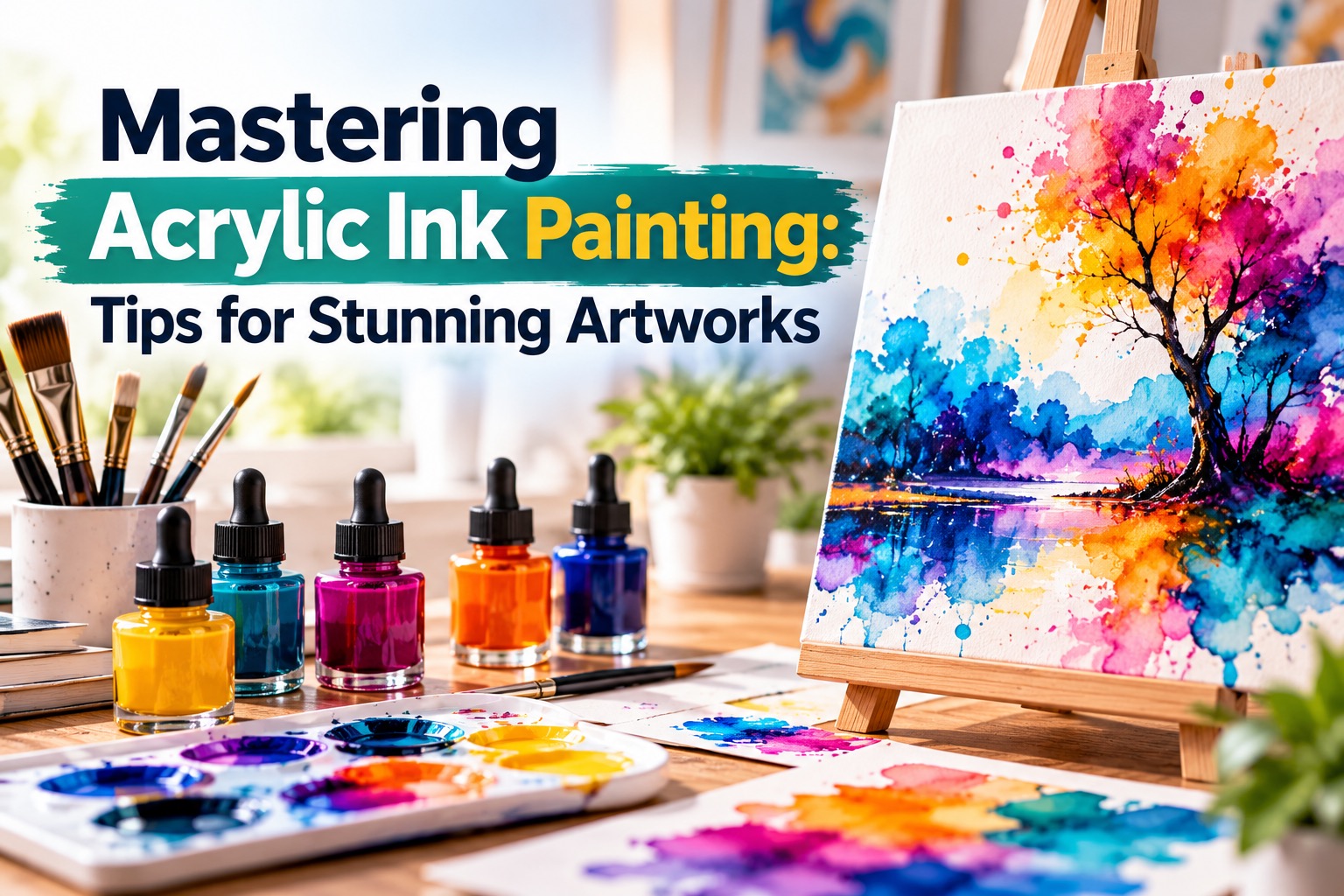
Unlock your creative potential with acrylic ink painting! Explore essential tips to create stunning artworks that captivate and inspire, regardless of your skill level.
Understanding the Basics of Acrylic Inks
Acrylic inks are a versatile and vibrant medium that offers a plethora of creative possibilities for artists of all levels. Unlike traditional acrylic paint, acrylic inks are fluid, allowing for smooth application and the ability to create intricate details. These inks are composed of pigment suspended in an acrylic polymer emulsion, which makes them water-resistant when dry. This unique property allows artists to layer colors without fear of muddying their work.
One of the significant advantages of acrylic inks is their intense pigmentation. The colors are bold and bright, making it easier to achieve striking effects in your artwork. Additionally, acrylic inks dry quickly, which is beneficial for artists who prefer to work at a faster pace or those who like to build layers rapidly. However, the quick drying time can also pose a challenge, especially for beginners who might need more time to blend and manipulate the ink on their canvas.
Understanding how acrylic inks interact with different surfaces and tools is crucial for mastering this medium. The inks can be applied using various techniques, from traditional brushes to unconventional tools like droppers, sponges, and even airbrushes. Each tool offers a different texture and effect, giving artists the flexibility to experiment and find their unique style. Familiarizing yourself with the properties and behavior of acrylic inks will lay a solid foundation for your artistic journey.
Essential Tools and Materials for Acrylic Ink Painting
To begin your acrylic ink painting journey, it’s essential to gather the right tools and materials. The quality of your supplies can significantly impact the outcome of your artwork, so investing in good-quality products is worthwhile. Here are some must-have tools and materials for acrylic ink painting:
First and foremost, you’ll need a set of high-quality acrylic inks. These come in a wide range of colors and can be purchased individually or as a set. Look for inks that offer high pigmentation and lightfastness to ensure your artwork remains vibrant over time. It’s also beneficial to have a palette or mixing tray, where you can blend colors and experiment with different shades.
Brushes are another crucial tool in acrylic ink painting. A variety of brush shapes and sizes will allow you to create different effects and textures. Flat brushes are excellent for broad strokes and background washes, while round brushes are perfect for detailed work and fine lines. Additionally, having a few specialty brushes, such as fan brushes or stippling brushes, can add interesting textures to your artwork.
Other essential materials include a high-quality paper or canvas suitable for acrylic inks. Watercolor paper is a popular choice because it can handle the fluidity of the inks without warping. You may also want to experiment with other surfaces, such as canvas boards or wood panels, to see how the inks behave differently. Lastly, having a set of mixing tools, including pipettes, sponges, and even cotton swabs, can help you achieve a variety of effects and make your acrylic ink painting experience more enjoyable.
Techniques for Mastering Acrylic Ink Application
Mastering the application of acrylic inks involves understanding and experimenting with various techniques to achieve the desired effects. One of the fundamental techniques is the wet-on-wet method, where you apply wet ink onto a wet surface. This technique allows the colors to blend seamlessly and create beautiful gradients and transitions. It’s particularly useful for backgrounds or creating atmospheric effects in your artwork.
Another popular technique is the wet-on-dry method, where you apply wet ink onto a dry surface. This method allows for more control and precision, making it ideal for detailed work and layering. By applying multiple layers of ink and allowing each to dry in between, you can build up depth and complexity in your artwork. This technique is excellent for creating shadows, highlights, and intricate details.
Exploring unconventional tools and methods can also enhance your acrylic ink painting skills. For instance, using droppers or pipettes to apply ink can create interesting drips and splatters, adding a sense of spontaneity and energy to your work. Sponges and brushes with varied textures can be used to create unique patterns and effects. Additionally, experimenting with techniques like masking, where you use tape or masking fluid to protect certain areas of your artwork, can help you achieve clean lines and sharp contrasts.
Color Theory and Mixing for Vibrant Results
Understanding color theory is essential for creating vibrant and harmonious acrylic ink artworks. Color theory involves the study of how colors interact with each other and the visual effects they produce when combined. By mastering color theory, you can make informed decisions about color choices and achieve more dynamic and visually appealing compositions.
The color wheel is a fundamental tool in color theory. It consists of primary colors (red, blue, and yellow), secondary colors (green, orange, and purple), and tertiary colors (combinations of primary and secondary colors). Knowing how to mix these colors effectively can help you create a wide range of hues and shades. For instance, mixing complementary colors (colors opposite each other on the color wheel) can create vibrant contrasts, while analogous colors (colors next to each other on the color wheel) can produce harmonious and pleasing combinations.
In addition to understanding the color wheel, it’s crucial to consider the properties of color, such as hue, value, and saturation. Hue refers to the color itself, value indicates the lightness or darkness of a color, and saturation describes the intensity or purity of a color. By manipulating these properties, you can create depth, contrast, and emphasis in your artwork. For example, using high saturation colors in focal areas can draw attention, while lower saturation colors can be used for background elements.
Experimenting with color mixing is also key to achieving vibrant results. Acrylic inks can be mixed directly on the palette or layered on the canvas to create new colors and effects. Understanding how different colors interact and blend can help you achieve the desired tones and gradients. Don’t be afraid to experiment and take risks with color combinations, as this can lead to surprising and exciting outcomes in your artwork.
Exploring Different Surfaces for Acrylic Ink Art
One of the exciting aspects of acrylic ink painting is the ability to work on various surfaces. Each surface offers unique characteristics that can influence the texture, appearance, and overall effect of your artwork. Exploring different surfaces can expand your creative possibilities and help you discover new ways to express your artistic vision.
Watercolor paper is a popular choice for acrylic ink painting due to its ability to handle the fluidity of the inks. The texture of watercolor paper allows the ink to flow and blend beautifully, creating soft gradients and smooth transitions. Additionally, watercolor paper is available in different weights and textures, giving you the flexibility to choose the one that best suits your style and preferences.
Canvas is another excellent surface for acrylic ink art. The durability and versatility of canvas make it a favorite among artists. Acrylic inks can be applied directly to the canvas or over a primed surface, allowing for different effects and finishes. Canvas also provides a sturdy support, making it ideal for larger artworks or pieces that require multiple layers of ink.
Wood panels and other unconventional surfaces can also be used for acrylic ink painting. Wood panels offer a smooth and rigid surface that can handle various techniques and textures. The natural grain of the wood can add an interesting element to your artwork, enhancing its visual appeal. Other surfaces to consider include metal, glass, and fabric, each offering unique challenges and opportunities for creative exploration.
Tips for Creating Depth and Texture in Your Artwork
Creating depth and texture in your acrylic ink paintings can elevate your artwork and add a sense of dimension and realism. One effective way to achieve depth is by using layering techniques. By applying multiple layers of ink and allowing each layer to dry before adding the next, you can build up depth and create a sense of distance in your composition. This technique is particularly useful for landscapes or scenes with multiple elements.
Incorporating various textures can also enhance the visual interest of your artwork. Experimenting with different tools and techniques can help you achieve a range of textures. For example, using sponges, palette knives, or even household items like plastic wrap can create unique patterns and effects. Additionally, combining different application methods, such as dry brushing, splattering, or stippling, can add complexity and richness to your artwork.
Playing with light and shadow is another essential aspect of creating depth. Understanding how light interacts with objects and surfaces can help you create realistic and dynamic compositions. Using darker values and shadows can push elements back in the composition, while lighter values and highlights can bring elements forward. Paying attention to the direction and intensity of light can guide your use of color and value, resulting in a more cohesive and visually compelling artwork.
Common Mistakes to Avoid in Acrylic Ink Painting
While acrylic ink painting offers endless possibilities, there are common mistakes that artists should be mindful of to ensure successful outcomes. One frequent mistake is overworking the ink. Due to the quick-drying nature of acrylic inks, it’s easy to over-manipulate the ink, leading to muddied colors or a loss of vibrancy. It’s essential to work efficiently and confidently, allowing the ink to flow naturally and avoiding excessive blending.
Another common mistake is not allowing enough drying time between layers. Layering is a crucial technique in acrylic ink painting, but applying new layers before the previous ones are fully dry can result in smudging or unwanted mixing of colors. Patience is key, and giving each layer adequate drying time will ensure crisp and clean results.
Ignoring the importance of surface preparation is another pitfall. Different surfaces require different preparations to ensure the ink adheres properly and achieves the desired effect. For example, priming a canvas or using a suitable ground for paper can significantly impact the final outcome. Taking the time to prepare your surface appropriately will enhance the longevity and appearance of your artwork.
Inspiring Acrylic Ink Artists to Follow
Exploring the work of other artists can be a great source of inspiration and motivation. There are many talented acrylic ink artists whose work showcases the versatility and beauty of this medium. Following their journeys and observing their techniques can provide valuable insights and spark new ideas for your own artwork.
One inspiring acrylic ink artist is Yellena James, known for her intricate and vibrant abstract compositions. Her work often features organic shapes and patterns, creating a sense of movement and fluidity. Yellena’s use of color and texture demonstrates the potential of acrylic inks to create dynamic and captivating artworks.
Another notable artist is Carne Griffiths, whose portraits and figurative works are characterized by their ethereal and dreamlike quality. Carne often combines acrylic inks with other media, such as tea and alcohol, to create unique and stunning effects. His ability to blend different elements seamlessly showcases the versatility of acrylic inks and the endless possibilities for experimentation.
Following these and other inspiring artists can provide a wealth of knowledge and inspiration for your own acrylic ink painting journey. Observing their techniques, studying their use of color and composition, and learning from their creative processes can help you develop your own style and push the boundaries of your artistic expression.
Conclusion and Next Steps for Aspiring Artists
Mastering acrylic ink painting is a rewarding and fulfilling artistic endeavor that offers endless possibilities for creativity and self-expression. By understanding the basics of acrylic inks, gathering the essential tools and materials, and experimenting with various techniques, you can create stunning artworks that captivate and inspire.
As you continue your acrylic ink painting journey, remember to embrace the process and enjoy the experimentation. Don’t be afraid to take risks and explore new ideas, as this is often where the most exciting and innovative artworks are born. Pay attention to color theory, surface preparation, and layering techniques to achieve vibrant and dynamic results.
Lastly, seek inspiration from other artists and continuously challenge yourself to grow and improve. The world of acrylic ink painting is vast and full of potential, and with dedication and practice, you can unlock your creative potential and create artworks that truly stand out. Happy painting!