
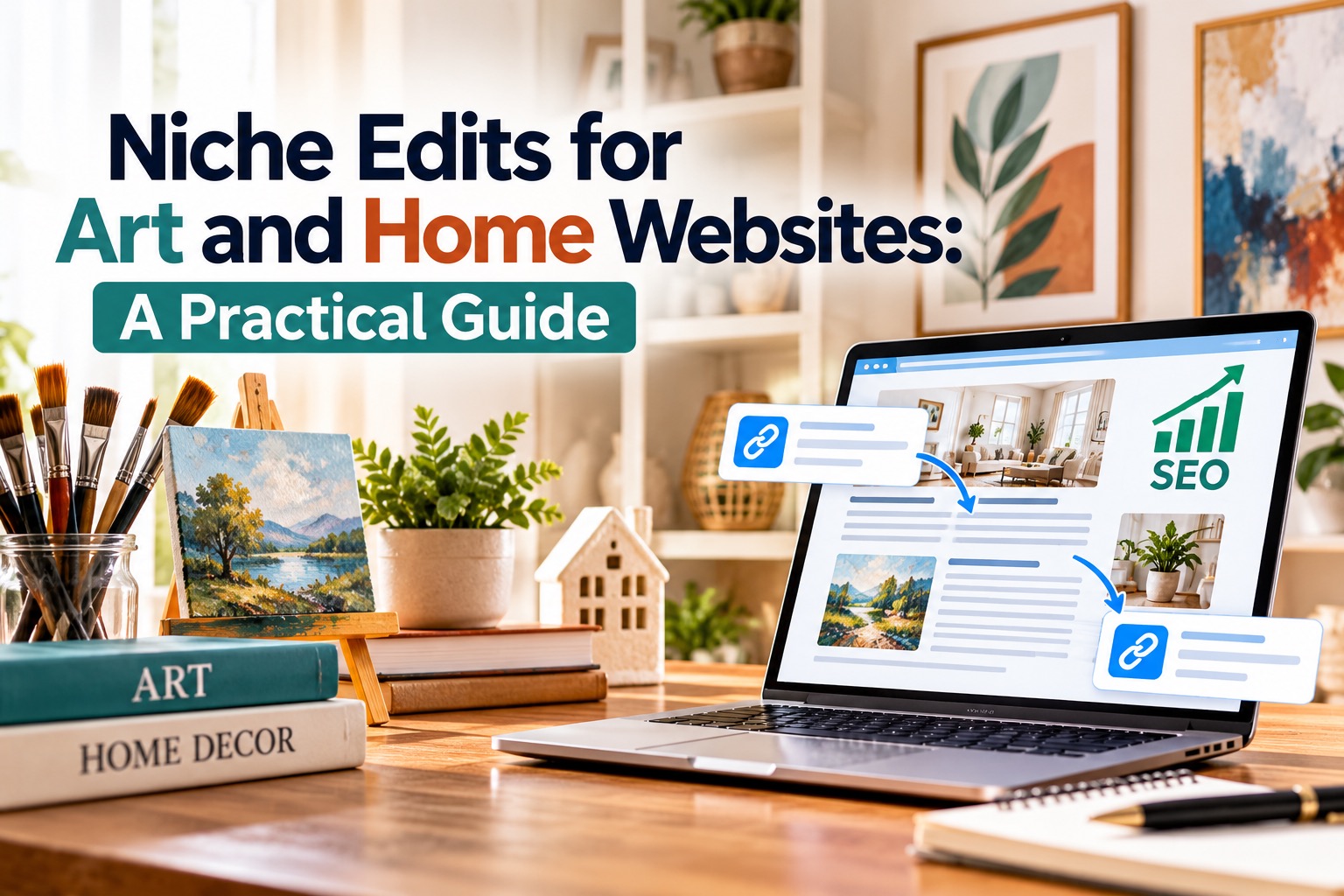
Artists, makers, and home-decor enthusiasts often build websites to share projects, sell work, or help readers try a new craft. But publishing useful content is only part of helping people find it. Niche edits are one SEO tactic that may bring relevant readers to an existing page, provided the link is genuinely useful and placed with care. Here’s what the approach means and how to think about it for an art or home website.
What Are Niche Edits?
A niche edit is a link added to a page that has already been published, rather than to a brand-new guest post. For example, a home DIY blog might update an older article about choosing wall art to point readers toward a detailed guide to framing prints. The existing page gives the link context, while the linked page offers a next step for readers.
The term is sometimes used for paid link placements, but a link’s value should not be judged by the transaction alone. Relevance, editorial judgment, and the experience of the reader matter. A fuller explanation of niche edits in SEO can help clarify how the tactic is commonly used and what to consider before pursuing one.
Why the Idea May Suit Creative Websites
Art and home sites often publish evergreen how-to content: watercolor basics, gallery-wall planning, furniture upcycling, or advice on displaying handmade work. A good article may keep attracting readers for years, but it can also benefit from thoughtful updates as new resources become available.
Suppose you have created a printable color-planning worksheet to accompany a room makeover guide. A relevant article on choosing the right paint colors might mention the worksheet if it genuinely helps its audience. Or a craft tutorial could refer readers to your original pattern when the connection is clear. In both cases, the link should answer a reader’s likely question—not simply exist to pass SEO value.
How to Assess a Possible Link Placement
Look for a close subject match
Start with the page, not a site-wide metric. Does the article discuss a topic that naturally overlaps with your resource? A link from a post about beginner collage techniques to a detailed guide on preparing paper scraps makes sense. A link from an unrelated page about general lifestyle trends is harder to justify, even if the website appears popular.
Read the full article
Check whether the surrounding paragraph supports the link and whether the page is accurate, readable, and maintained. A link placed in an awkward sentence or a long list of unrelated recommendations can weaken trust. The best placement feels like a useful addition an editor would make for readers.
Check the destination
Your linked page should deliver what its anchor text promises. If it points to a tutorial, the instructions should be complete and clear. If it leads to a product or service, that purpose should be apparent. Make sure the page works on phones, loads reliably, and provides enough substance to reward a click.
Keep Editorial Standards in View
Links should be added with the site owner’s permission and in keeping with the publisher’s policies. Avoid mass outreach that treats every old article as an available slot. Search engines also distinguish between editorial recommendations and links placed primarily to manipulate rankings; paid links may need appropriate qualification under applicable search guidance. If you are unsure, ask the publisher how they handle commercial relationships rather than assuming a link can be inserted without disclosure.
It is also wise to avoid promises of guaranteed rankings or traffic. Search performance depends on many factors, including the usefulness of the content, competition, and how well a page meets a searcher’s needs. A relevant link can help readers discover a resource, but it is not a substitute for making that resource worth visiting.
Finding Help Without Losing Control
Small creative businesses sometimes hire freelance writers, researchers, or SEO specialists to review older content and identify worthwhile updates. If you use a marketplace such as Osdire, be specific about the work you need and the standards you expect. Its marketplace spans more than 900 categories, so a clear project brief helps distinguish a writer familiar with art and home topics from someone offering a different service.
Before posting a project, decide what a successful deliverable looks like: perhaps a list of relevant pages, proposed edits with sources, or a revised article for your own site. Ask candidates how they assess relevance and whether they will seek publisher permission. This guide on writing a clear freelance offer covers how to describe a project so applicants can respond with useful details. Agree on scope and review the work before approving it.
A Reader-First Way to Update Content
For an art or home website, the most sustainable approach is to create helpful resources, keep older posts current, and consider a link only when it improves the reader’s journey. A well-chosen reference can connect a decorating idea to a practical tutorial or help a beginner find the next step in a craft project. If the connection feels forced, leave it out. Strong editorial choices protect your site’s credibility—and make every link more meaningful.