

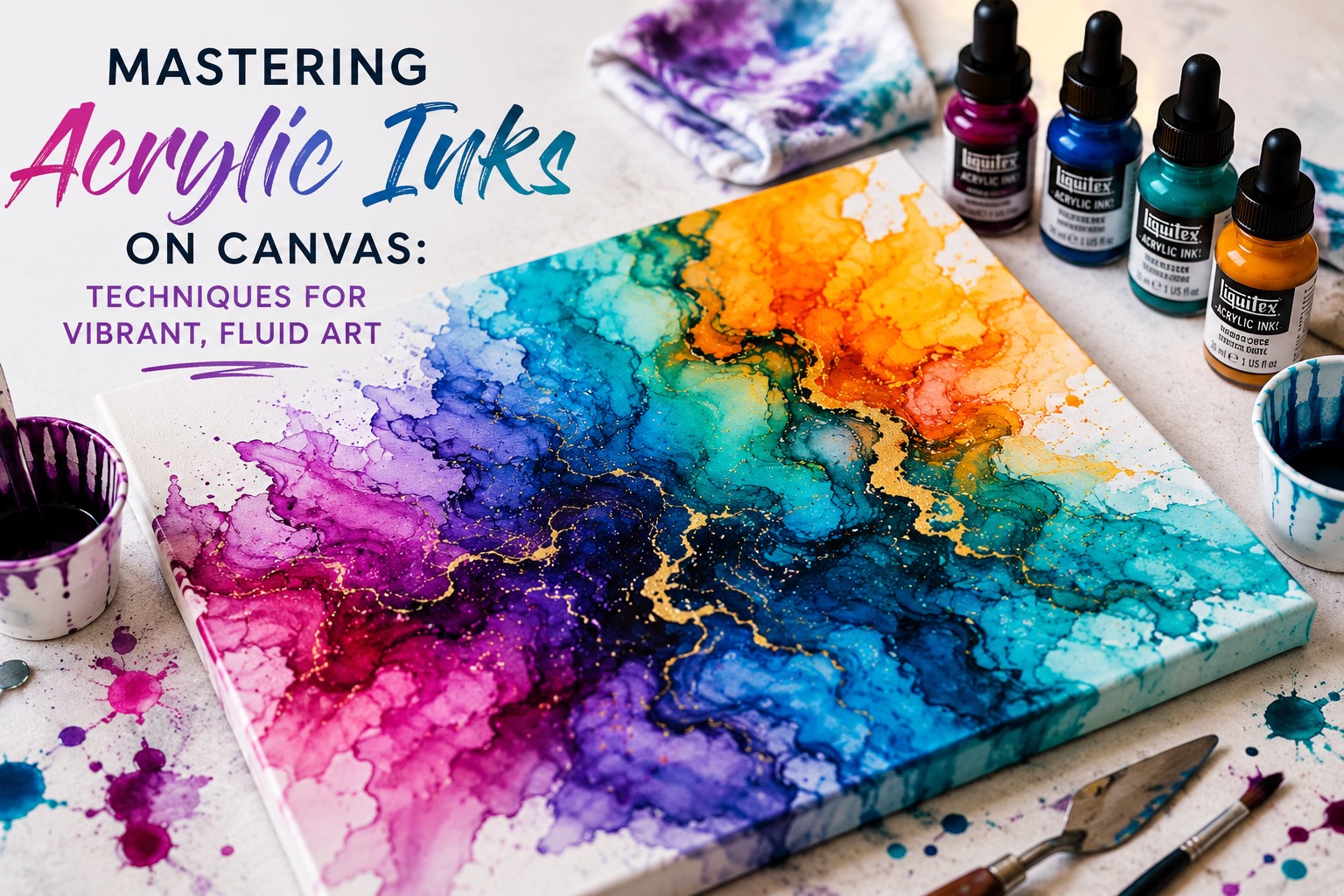
Many artists start their journey with thick, heavy-body acrylic paints. They love the texture and the way the paint stands off the surface. However, there is another way to work. Learning how to use acrylic inks on canvases opens up a world of fluid color and intense saturation. These inks bridge the gap between the flow of watercolor and the permanent, water-resistant nature of acrylics. As fluid art grows in popularity, these inks have become the go-to medium for artists wanting bright, clean layers on canvas.
Understanding Acrylic Inks Versus Traditional Acrylics
Composition and Consistency Comparison
Acrylic inks are not just watered-down paint. They contain a high concentration of pigment suspended in a very thin, fluid acrylic polymer. This creates intense color that stays vibrant even when spread thin. Traditional tube acrylics use binders to create a thick, buttery consistency. Inks are designed to be thin, making them flow easily across a surface without the need for heavy dilution.
Always check the bottle label for pigment load ratings. You want to look for ASTM ratings for permanence and lightfastness. ASTM I indicates the highest level of lightfastness, meaning your colors will not fade quickly when exposed to light. High-quality inks will clearly display this information, helping you choose colors that last.
Surface Preparation: Priming Canvas for Ink Flow
Standard gesso creates a toothy, absorbent surface. This is great for oil or heavy acrylics, but it can be difficult for ink. If the canvas is too absorbent, the ink sinks into the fibers and stops moving. You end up with dull, blotchy results.
To fix this, prepare your surface differently. Apply a thin layer of clear sizing or a light wash of acrylic medium to seal the weave of the canvas. This creates a non-porous layer that lets the ink sit on top. Many professional fluid artists prefer this method to ensure the pigment moves across the surface as intended.
Drying Times and Curing Processes
Acrylic inks dry fast because they contain very little thick binder. You might see the surface look dry within ten minutes in a warm room. However, do not mistake surface dryness for a full cure. The acrylic polymer needs time to cross-link and become water-resistant.
Humidity plays a huge role in this process. If you live in a humid climate, your work will take much longer to cure. Give your canvas at least 24 to 48 hours to fully set before you attempt to varnish or touch the surface. Patience here prevents later damage to your work.
Essential Tools and Materials for Canvas Work
Selecting the Right Acrylic Ink Brands
Not all inks are made the same. Some are thinner than others, and some have higher pigment loads. Research established professional-grade lines. Look for viscosity ranges that match your goals. If you want to paint fine details, a slightly thicker ink helps. If you want free-flowing color for pouring, a thinner ink works best. Manufacturer data often highlights archival quality, so check their websites for specs on how the inks age over time.
Brushes, Pouring Tools, and Applicators
When you learn how to use acrylic inks on canvas, your tool choice determines your outcome. Avoid natural hair brushes. They are too absorbent and soft. Instead, use high-quality synthetic brushes. They do not shed and provide the right spring to move ink around. Mop brushes are great for large, smooth washes.
For pouring, use plastic cups, syringes, or squeeze bottles. These tools give you control over how much ink hits the canvas and where it lands. A palette knife is also useful. You can use it to scrape ink across the surface or to create sharp lines between different colors.
Mediums to Enhance Flow and Adhesion
Sometimes, you need to change the behavior of your ink. Pouring mediums are essential here. They extend the ink, making it go further while keeping the binder strength high. Unlike adding plain water—which can cause the paint to flake off if you add too much—pouring mediums keep the film strong. Check your medium’s technical data to ensure it does not dull your color. A good medium keeps the surface tension high, which helps prevent unwanted “crazing” or cracking as the ink dries.
Core Techniques: Applying Acrylic Ink on Canvas
Wet-on-Wet and Layering Techniques
This technique relies on gravity. Start by applying ink to the canvas surface. Tilt the canvas in different directions to let the ink run. If the ink is too slow, use a heat gun or a hair dryer on a low setting to push the liquid.
To create a clean blend, follow these steps:
1. Apply a base layer of clear pouring medium or water to the canvas.
2. Drop small amounts of ink onto the wet surface.
3. Tilt the canvas gently. The ink will bloom and spread into the wet base.
4. Stop tilting before the ink reaches the edges if you want a clean border.
Pouring Methods: Dirty Pour vs. Swipe Technique
The “dirty pour” is a staple of fluid art. You combine several colors into one cup without mixing them completely. You then pour the cup onto the canvas in a single motion. As the ink hits the surface, the colors stay distinct but swirl together.
The “swipe” technique is different. You lay down lines of ink or paint across the canvas. Then, take a wet palette knife or a damp paper towel and drag it across the colors in one smooth pass. This pulls the colors into one another and often creates cells or lacing effects. Your canvas prep is key here. If the surface is too rough, the swipe will look broken and messy.
Ink Blending and Watercolor Effects
Acrylic inks excel at transparency. By mixing the ink with a significant amount of acrylic thinner or water, you can create glazes. Build these up in thin layers to add depth to your work. Because each layer dries quickly, you can work on complex compositions without waiting days between steps. This technique mimics the look of watercolor but offers the permanence of acrylic. Many abstract painters use this layering to create glowing, light-filled surfaces that are impossible to get with heavy paint.
Sealing and Finishing Your Acrylic Inks on Canvas
Protecting Pigment Saturation: Varnishing Options
Fluid acrylics are magnets for dust. Since they are liquid, dust particles often settle onto the surface while it dries. A varnish is necessary to protect the work and lock in the color. High-gloss varnish makes the colors pop and look wet. Satin varnish gives a softer, more professional finish that reduces glare. Always apply an isolation coat—a thin layer of clear acrylic medium—before your final varnish. This acts as a barrier, keeping your work safe if the varnish ever needs to be removed.
Addressing Cracking and Adhesion Issues Post-Cure
Cracking happens when the ink is applied too thickly or the surface has too much water and not enough binder. If you see cracks, don’t panic. You can often fix them by dabbing a very thin layer of clear medium over the area. This fills the gap and reinforces the bond. If you see peeling or flaking, it means the ink was likely applied to a surface that was too smooth or greasy. Always clean your canvas before you start to ensure good adhesion.
Troubleshooting Common Challenges with Acrylic Inks on Canvas
Controlling Unwanted Bleeding and Spreading
Sometimes, the ink travels further than you want. Use masking tape to create barriers. Apply the tape firmly to the canvas edges to block the flow. You can also use a small brush to outline your area with a clear medium before adding the ink. This creates a dam that stops the ink from bleeding into unwanted areas.
Achieving Consistent Color Density Across the Surface
Uneven color is often caused by an uneven surface. If parts of your canvas are more absorbent than others, the ink will look patchy. Apply a uniform layer of primer or sizing to the entire canvas before you start. This ensures that the ink sits on the same material everywhere. If you notice thin spots, don’t try to add more ink to the wet area. Wait for it to dry and then add a second, thin layer.
Preventing Dust and Debris Contamination While Drying
Dust is the enemy of fluid art. To keep your work clean, set up a drying area before you begin. A simple trick is to place your canvas inside a large plastic storage bin. Prop the lid up just a bit to allow for air flow but block dust from falling onto the wet ink. This simple setup keeps the surface clear while the ink cures.
Conclusion: Elevating Your Acrylic Canvas Artistry
Learning how to use acrylic inks on canvas allows you to create vibrant, fluid art that stands out. By focusing on surface preparation, using the right tools, and managing your drying process, you gain control over a medium that can seem unpredictable. Remember to use quality materials, seal your work with an isolation coat, and be patient during the curing phase.
Keep these core points in mind for your next project:
• Seal your canvas weave before applying ink to prevent unwanted absorption.
• Use synthetic brushes to ensure smooth application and avoid bristle shedding.
• Apply varnish to protect your work from dust and UV damage once cured.
• Use pouring mediums to maintain binder strength and prevent cracking.
With practice, these techniques will become second nature, allowing your creativity to flow as freely as the medium itself.
Looking for high-quality watercolours, acrylic inks, Canvases, calligraphy supplies, and professional art materials in the UAE? Discover a wide range of trusted artist brands, vibrant colors, and creative tools at Sandhai.ae. Whether you’re an illustrator, painter, designer, or hobby artist, Sandhai offers everything you need to bring your creativity to life — all with fast UAE delivery and convenient online shopping.