Comparison of Acrylic Ink vs India Ink
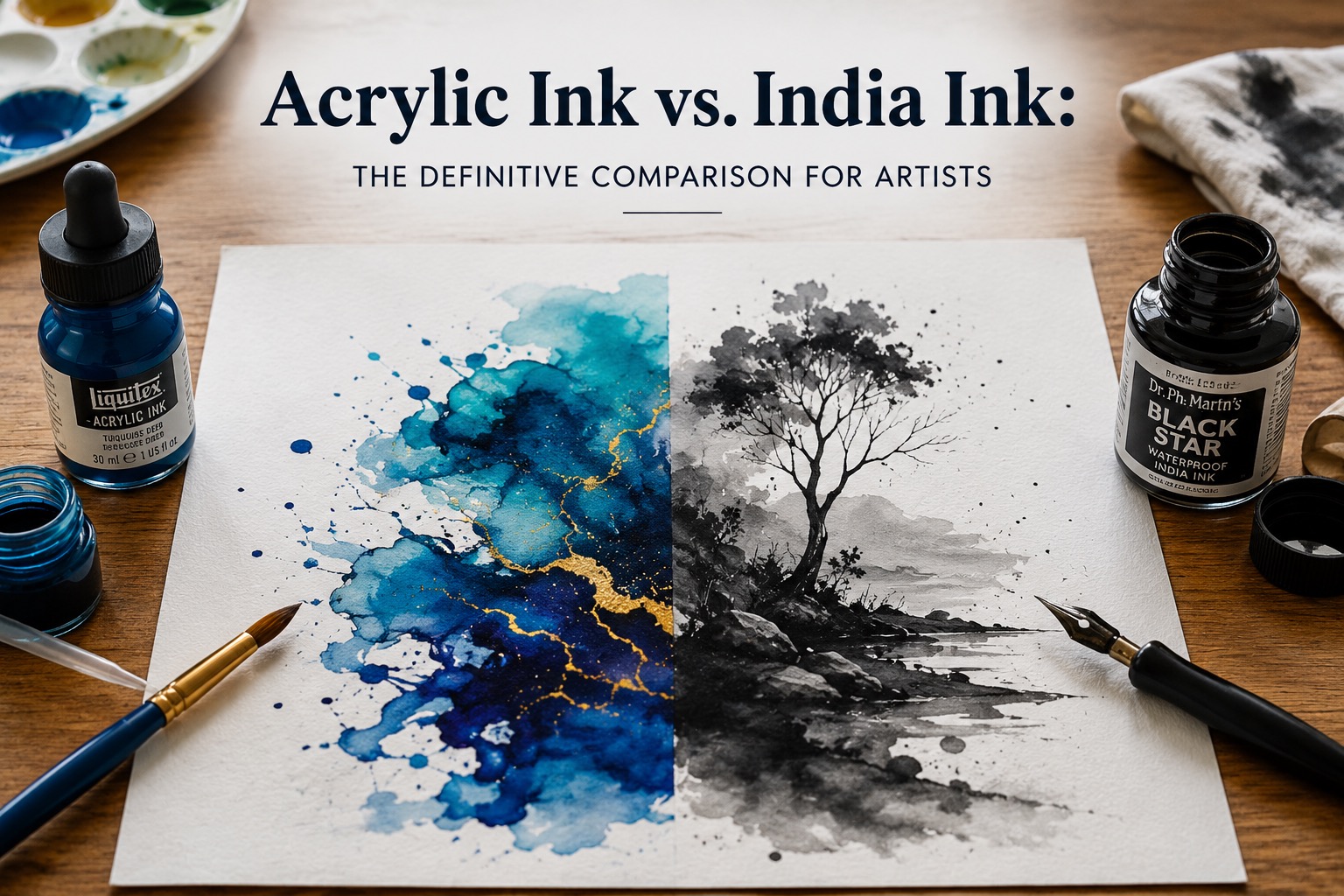
You stare at the blank page, ink bottle in hand, wondering if you picked the right fluid for your line work. The visual result might look the same at first glance—a deep, rich black stain on paper. However, the chemistry beneath the surface varies wildly. Choosing between acrylic ink vs india ink determines whether your work survives a watercolor wash, how it ages, and if your tools survive the session.
India ink relies on traditional recipes using lampblack pigment and shellac. Acrylic ink uses a modern formula of pigment and acrylic polymer. This fundamental difference creates a divide in how each medium behaves on your paper and how it reacts to time.
Understanding India Ink – Tradition and Permanence
Composition and Historical Context
Traditional India ink has a history that spans centuries. Its classic composition features carbon black pigment, also known as lampblack, mixed with a binder like shellac and an alcohol carrier. This recipe was the standard for technical drawing, calligraphy, and traditional illustrations for generations.
While the term “India ink” now covers a range of products, the traditional versions remain distinct. Some modern brands use synthetic binders that mimic the properties of shellac, which blurs the lines between old-school and new formulations. Understanding the binder in your specific bottle remains the best way to predict how the ink will behave.
Performance Characteristics: Flow, Finish, and Reactivity
India ink is prized for its flow. It moves through dip pens and technical pens with ease, making it a favorite for fine line work and intricate detailing. The finish typically dries to a deep matte or a slight semi-gloss, which many artists prefer for its high-contrast, non-reflective quality.
The most critical factor to remember is its relationship with water. Traditional shellac-based India ink dries quickly, but it remains somewhat sensitive to solvents. In many cases, adding water or alcohol over a dried layer of India ink can cause the pigment to lift or smear. This makes it challenging to layer wet media over the top without disrupting your initial lines.
Ideal Applications for India Ink
Dip pen line work stands as the primary home for this medium. The ink offers enough body to cling to a nib but stays fluid enough to create thin, consistent lines. Calligraphers and ink illustrators value this ink for its predictability in a pen. Because it lacks the heavy plastic binder of acrylics, it offers a specific tactile experience that many traditional artists find irreplaceable.
Decoding Acrylic Ink – Modern Versatility and Durability
The Polymer Advantage: Formulation and Curing Process
Acrylic ink acts as a fluid version of acrylic paint. It contains highly dispersed pigments suspended in an acrylic polymer emulsion. When this ink dries, the polymer binds the pigment to the surface, creating a flexible, plastic-like film. This process makes the ink fully waterproof once cured.
Because these inks use lightfast pigments, they often meet high archival standards. High-quality brands provide ASTM lightfastness ratings, giving you confidence that your work will resist fading over time. Unlike traditional dyes that might fade under direct sunlight, many professional acrylic inks are built to last for decades in gallery conditions.
Finish, Texture, and Opacity Comparisons
You will notice that acrylic ink tends to be more vibrant than India ink. It often dries with a semi-gloss or gloss finish, depending on the pigments used. You can alter its consistency with water or specific acrylic mediums, which allows you to change the transparency without losing the binding strength of the polymer.
One major advantage is the ability to layer. Once an acrylic ink layer dries, it stays put. You can paint, draw, or spray over it without the underlying work lifting or bleeding into your new marks. This makes it an ideal choice for complex, multi-layered mixed media projects where stability matters.
Where Acrylic Ink Excels
Acrylic ink is the go-to choice for artists who need durability. It works perfectly for mixed media, where you might apply watercolor or gouache on top of your ink lines. Airbrush artists also prefer this medium, provided the ink is labeled for airbrush use, as the pigment size is small enough to pass through fine nozzles without clogging. For outdoor art or murals, the water resistance of acrylic ink provides a necessary defense against the elements.
Direct Comparison – Key Differences Artists Must Know
Water Resistance and Reactivation
The most jarring difference between these two media is how they handle moisture. If you paint a watercolor wash over a drawing done with traditional India ink, you run a high risk of the ink reactivating. Your sharp black lines may bleed into your wash, turning a crisp drawing into a muddy mess.
Conversely, a drawing done with acrylic ink will not move. The cured acrylic binder protects the pigment, allowing you to glaze, wash, and scrub over the lines as much as you like. This makes acrylic ink the safer choice for artists who plan to use heavy water applications after their ink work.
Lightfastness and Archival Quality
Archival quality defines how well your work holds up against the passage of time. Traditional India ink, especially if it relies on organic dyes or lower-grade binders, can fade or shift in color when exposed to UV light. Professional acrylic inks use artist-grade pigments designed to resist UV radiation. If you plan to sell your work or display it in a gallery, checking the label for ASTM lightfastness ratings is a smart practice.
Pen and Tool Compatibility
Both inks demand respect when it comes to tool maintenance. Traditional shellac-based India ink dries into a hard, stubborn substance that can clog technical pens rapidly. Once it dries inside a pen, you often need specific shellac cleaners to dissolve it.
Acrylic ink also presents a danger to your tools. Because it dries into a permanent plastic, it will ruin a fountain pen or a technical pen if you let it dry inside the mechanism. You must clean your pens immediately after use with warm water and soap. Always keep your nibs and brushes wet while working to prevent the ink from setting in the bristles or the feed.
Practical Considerations for Selection and Use
Choosing the Right Medium for Your Technique
Making the right choice depends on your specific workflow. Use the following guide to help decide which ink fits your current project:
• Choose India Ink for: Traditional dip pen drawings, high-contrast black-and-white studies, calligraphy where you want a classic matte look, and projects where you do not plan to apply water-based media on top.
• Choose Acrylic Ink for: Mixed media projects, layering with watercolors or gouaches, airbrushing, outdoor art, and any work that requires high archival standards and a permanent, waterproof finish.
Working with Color Varieties
India ink is almost exclusively black, with some sepia and white options available. If your work requires a full range of colors, acrylic ink is the clear winner. The market for acrylic inks is vast, offering nearly every hue available in traditional acrylic paint. These inks provide excellent transparency, allowing you to use them like liquid watercolors or to build up solid, opaque blocks of color.
Cost and Accessibility Analysis
When comparing prices, both inks vary by brand and quality. Traditional, high-quality India ink often costs less per ounce than professional-grade fluid acrylic inks. However, professional acrylic inks often offer better value in the long run if you factor in the archival safety and the versatility of using them as both ink and paint. For hobbyists, the budget-friendly nature of India ink makes it an easy starting point, but consider the hidden cost of potential lightfastness issues for serious pieces.
Final Thoughts
The choice between these two fluids, Acrylic Ink vs India Ink, comes down to your priorities. India ink remains the standard for purists who love the flow, the matte finish, and the traditional feel of a dip pen. It carries a history that many artists prefer for line-heavy illustrations.
Acrylic ink offers the flexibility, permanence, and color range required for modern, experimental work. It solves the reactivation issue and gives you the freedom to build layers without worry. Before you commit to a large-scale project, take a small scrap of your preferred paper and test both mediums with your pens and brushes. See how they react to your specific tools and layering habits. This small test will reveal which ink feels like an extension of your hand and which one belongs in your drawer.
Looking for high-quality acrylic inks, India inks, calligraphy supplies, and professional art materials in the UAE? Discover a wide range of trusted artist brands, vibrant colors, and creative tools at Sandhai.ae. Whether you’re an illustrator, painter, designer, or hobby artist, Sandhai offers everything you need to bring your creativity to life — all with fast UAE delivery and convenient online shopping.